UK forces Google AI Search opt-outs: a marketer playbook for AEO and measurement in a zero-click world
.webp)
A UK regulator said Google must let publishers opt out of AI Search features, including AI Overviews, and also opt out of having their content used for model fine-tuning, as reported. For marketers, this signals that AI answers are becoming a distinct distribution surface where presence and influence can increase even when sessions decrease. The practical response is to identify which valuable queries are likely to be satisfied on the results page, then upgrade content so answers are accurate, extractable, and aligned with your canonical “brand facts.” Measurement should separate AI answer presence from rankings and traffic, and validate impact with downstream outcomes rather than clicks alone.

AI answers become a separate distribution layer—often increasing visibility while reducing clicks—and can be governed through opt-outs.
Key takeaways
- Treat AI answer visibility as a separate layer of distribution, not just “organic traffic.”
- Build an AI-answer risk map for your most valuable query sets before you change content or KPIs.
- Harden “brand facts” (product naming, taxonomy, canonical pages, disclaimers) to reduce AI answer drift and misquotation risk.
- Reset reporting: track AI answer presence and downstream effects so you do not optimize for the wrong proxy.
What the UK ruling changes in AI Search (and what it signals)
According to reporting, a UK regulator said Google must allow publishers to opt out of AI Search features, including AI Overviews. This matters because it frames AI-generated search experiences as something publishers can actively govern, rather than passively accept.
The same reporting also describes an opt-out for the use of publisher content in model fine-tuning. For marketers, this is a reminder that how content is used to generate answers and how content is displayed in answers are related but distinct concerns that can affect visibility, brand interpretation, and traffic.
Even if your campaigns are not UK-specific, the broader signal is that AI answer surfaces may be shaped by policy and compliance. That creates planning uncertainty for teams that rely on a stable relationship between rankings, clicks, and outcomes.
- Operational implication: treat AI answer inclusion as a controllable variable in your strategy discussions, not as an “SEO side effect.”
- Stakeholder implication: bring legal, brand, and analytics stakeholders into the loop early because opt-outs and content usage rules can impact both messaging and measurement.
Why marketers should expect more “visibility up, clicks down” outcomes
AI answers can satisfy intent directly on the search results page for some queries. When that happens, a user may read an AI response, get what they need, and never click through, even if your content contributed to the response.
This creates a widening gap between several things teams often treat as the same:
- Ranking: where a page appears in traditional results.
- AI answer inclusion: whether your brand or content is represented in an AI-generated answer.
- Sessions: visits that actually arrive on your site.
- Conversion influence: whether search exposure helped a user later convert, even if the first interaction produced no click.
If teams only watch clicks and last-click attribution, they risk concluding that “search is failing” when the reality is that distribution has shifted. The reverse is also possible: visibility may look strong, but if an AI answer misstates constraints or eligibility, it can generate low-quality leads or set incorrect expectations.
The planning takeaway is to define search success in layers. Keep traditional KPIs, but add AI answer presence and downstream outcomes so you can tell whether search is changing shape or actually losing effectiveness.
Build an AI-answer risk map for your highest-value queries
A simple risk map helps prioritize which query sets are likely to become zero-click and where accuracy or disclaimers matter most.
Before changing content or KPIs, build a simple risk map focused on the queries that matter most to revenue and brand. Start with an inventory of high-value queries across four buckets:
- Brand queries: brand name, brand + product, brand + pricing, brand + reviews.
- Product queries: product names, SKUs, feature questions, comparisons.
- Category queries: “best X,” “X for Y,” “X vs Y,” alternatives lists.
- Problem/solution queries: “how to,” troubleshooting, definitions, and decision support questions.
Next, classify intent by how likely it is to be fully answerable on the results page versus requiring a click to convert or qualify. You are not predicting the future perfectly; you are creating a working model to guide effort.
- Likely fully answerable on-results: definitions, basic comparisons, simple “what is” questions, and high-level guidance.
- Likely to require a click: tasks involving eligibility checks, personalized configuration, detailed pricing, sign-up flows, or anything requiring user-provided information.
Finally, prioritize pages where factual accuracy, eligibility, and disclaimers are business-critical. These are the areas where a small misquote or omission can create outsized risk. Your risk map should highlight where you need tighter wording, clearer constraints, and more obvious canonical references.
- List your top query sets by business value.
- Tag each set as “answerable on-SERP” or “needs click.”
- Flag any query set where disclaimers, eligibility rules, or compliance language must be correctly conveyed.
AEO content upgrades to improve inclusion and reduce misquotation
An AEO approach focuses on helping AI systems and users extract correct answers quickly. The goal is not just to rank, but to make the answerable parts of your content unambiguous and up to date so they can be represented accurately when a click does not happen.
Start by writing for answerability. For priority pages, tighten the “first extraction” layer of content:
- Clear definitions: explain key terms in plain language.
- Constraints: state what is true, and also what is not true (limits, exclusions, prerequisites).
- Up-to-date facts: ensure the core statements you would want quoted are current and consistent across relevant pages.
Next, make critical disclaimers and eligibility rules unambiguous and easy to extract. If the user experience depends on a rule, avoid burying it in long paragraphs that can be partially quoted. Use short, direct sentences and keep the language consistent across pages so the same rule is not described multiple ways.
Finally, strengthen “brand facts” as an asset. This is a content governance practice as much as a writing practice:
- Consistent naming: use the same product and feature names everywhere.
- Product taxonomy: keep category and subcategory language consistent so it is harder to confuse adjacent offerings.
- Canonical pages: maintain clear, authoritative pages that serve as the primary reference for each product, feature, and key policy.
As a quality check, review your most important pages as if you were a system trying to extract a one-paragraph answer. If multiple interpretations are possible, rewrite until the intended interpretation is the easiest one to extract.
Measurement reset: new baselines and reporting that separate AI answers from traffic
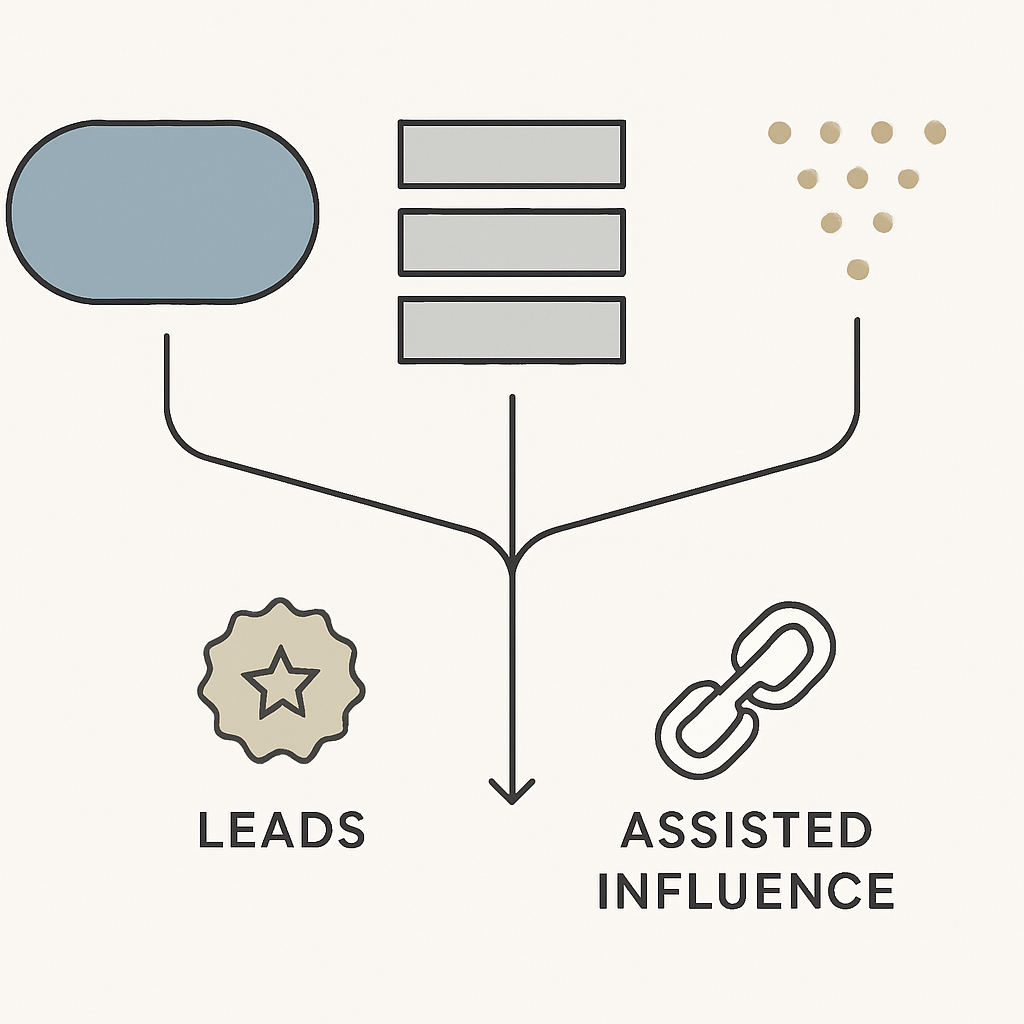
Separate AI presence, rankings, and sessions—then judge performance by downstream outcomes, not clicks alone.
If AI answers are satisfying more intent on the results page, sessions may decline even when brand exposure holds steady or grows. That is why you need baselines before optimizing: decide what “good” looks like if clicks fall, and align stakeholders on which outcomes will define success.
Build reporting views that separate the major layers instead of blending them:
- AI answer presence: where you appear in AI answers for priority queries.
- Traditional rankings: classic organic positions for the same queries.
- Site sessions: visits and engagement from organic search.
Then validate impact using downstream outcomes rather than last-click-only expectations. If the on-results experience reduces clicks, last-click organic conversions may fall even while search meaningfully contributes to consideration and later conversions.
- Leads and pipeline outcomes: monitor whether lead volume and quality change for query groups most affected by AI answers.
- Assisted conversions: evaluate whether search exposure assists conversions that are credited to other channels.
- Measurement checks: ensure tracking is consistent over time so you can attribute changes to distribution shifts rather than instrumentation changes.
Use your AI-answer risk map to guide the measurement reset. For “fully answerable on-SERP” query sets, expect a weaker relationship between rankings and sessions. For “needs click” query sets, focus on conversion intent, qualification, and whether the click still provides unique value that cannot be satisfied on-results.
Sources
Frequently asked questions
What does it mean to opt out of Google AI Overviews for publishers?
As reported, it means a publisher would have a mechanism to opt out of AI Search features including AI Overviews, so their content is not used in that feature in the way the rule specifies. In practice, it frames AI answer inclusion as something publishers can control rather than an automatic use of their pages.
How can marketers measure the impact of AI Overviews if organic clicks fall?
Separate measurement into layers: AI answer presence, traditional rankings, and site sessions. Then evaluate downstream outcomes like leads and assisted conversions, instead of relying on clicks and last-click attribution alone. Establish baselines before making changes so you can interpret “sessions down” alongside “outcomes stable” or “outcomes up.”
What is an AEO strategy and how is it different from SEO?
An AEO strategy focuses on making your content easy to extract into accurate answers, especially when users may not click through. SEO is often centered on improving rankings and driving visits; AEO adds an explicit focus on answer accuracy, constraints, and clear “brand facts” so your information can be represented correctly in AI answers.
How do you reduce incorrect or outdated brand facts in AI-generated search answers?
Harden your “brand facts” in your own content: keep naming consistent, maintain a clear product taxonomy, and ensure canonical pages contain the most current definitions, constraints, and policies. Make disclaimers and eligibility rules easy to extract with clear, unambiguous language, and remove conflicting phrasing across pages so the simplest extracted answer is also the correct one.
.webp)
.webp)
.webp)
.webp)
.webp)