Why Creative Analytics and Synthetic Audiences Matter for Manufacturing Leaders
.webp)
Key Takeaways
- Treat creative analytics as an operational insight tool, not just a marketing metric. It helps manufacturers understand how messaging communicates technical capabilities to engineers, sourcing teams, and operations leaders.
- Use synthetic audiences to test messaging before campaigns launch. Simulating audience responses allows manufacturers to evaluate whether technical messaging resonates with the right buyers.
- Separate messaging performance from targeting performance. A structured creative testing approach helps identify whether campaign outcomes are driven by the audience reached or the message delivered.
- Improve digital credibility signals. As AI-driven search tools increasingly shape supplier discovery, clear documentation of expertise, case studies, and technical outcomes becomes more important.
- Reduce marketing risk through pre-campaign analysis. Testing creative and audience response before deploying campaigns can reduce wasted marketing spend and improve lead quality.
The Hidden Challenge Facing Modern Manufacturing Companies
Manufacturers invest heavily in engineering, production systems, and operational excellence. Entire teams focus on improving efficiency, reducing defects, and refining processes.
Yet when it comes to marketing, many companies still rely on methods that were designed for a different era.
For decades, the typical manufacturing marketing strategy looked something like this:
- Attend trade shows
- Maintain distributor relationships
- Build a website
- Rank for a few industry keywords
- Generate inbound leads
This approach worked because buyers discovered suppliers through industry networks and search engines.
But the discovery process is now changing.
Engineers, sourcing teams, and executives increasingly ask AI-driven systems detailed questions about suppliers and technical capabilities. Instead of reviewing a list of links, they receive synthesized answers that evaluate potential vendors and solutions.
In this environment, visibility alone is no longer enough.
Manufacturers must ensure their expertise is clearly understood and trusted before the first conversation ever happens.
For manufacturing executives and operations leaders, this raises an important question:
How can companies ensure their capabilities and expertise resonate with the right technical buyers?
Two emerging technologies are helping address this challenge:
Together, they allow companies to evaluate and refine their marketing communication with the same discipline they apply to engineering and operations.

Why Manufacturing Marketing Has Become More Complex
Marketing industrial capabilities has always been different from consumer marketing. But the gap between the two has widened in recent years.
Manufacturing organizations now face several structural challenges when communicating their value.
Complex Products and Technical Buyers
Manufacturing companies often provide highly specialized products or services.
These may include:
- Precision machining
- Industrial automation systems
- Advanced materials
- Engineered components
- Custom manufacturing solutions
The buyers evaluating these capabilities are not casual consumers. They are experts in their fields.
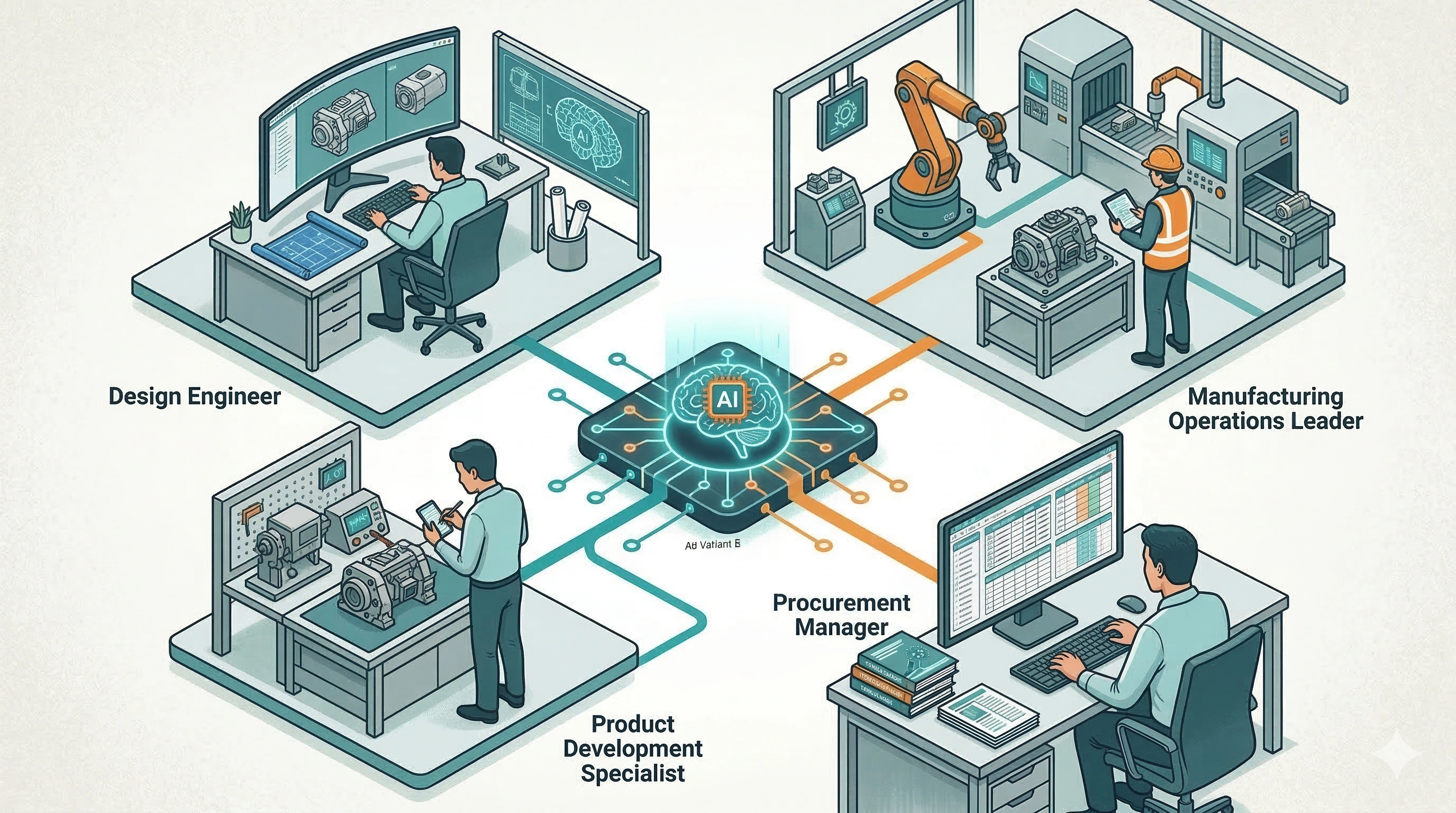
Typical stakeholders include:
- Design engineers
- Procurement managers
- Manufacturing operations leaders
- Supply chain specialists
- Product development teams
Each of these audiences evaluates suppliers through a technical lens.
They want to understand:
- Engineering capabilities
- Manufacturing processes
- Quality controls
- Performance outcomes
If marketing materials fail to communicate these elements clearly, potential buyers may never recognize the company’s expertise.
Long and Risk-Sensitive Sales Cycles
Industrial purchasing decisions often involve long evaluation periods.
Projects may require:
- Extensive technical documentation
- Internal approvals
- Financial justification
- Supplier validation
Choosing the wrong supplier can disrupt production schedules, increase costs, or delay product development.
As a result, buyers prioritize credibility and trust signals when evaluating potential partners.
The Rise of AI-Assisted Research
Another major shift is the growing use of AI tools during the research process.
Instead of manually comparing dozens of supplier websites, buyers increasingly ask AI systems questions such as:
- Which manufacturers specialize in lightweight aerospace components?
- Who has expertise in high-cycle industrial applications?
- What companies have proven success in precision machining?
AI systems analyze patterns across digital sources and generate structured answers.
These systems prioritize signals such as:
- Documented case studies
- Consistent expertise across content
- Demonstrated outcomes
- Technical credibility
In this environment, marketing content becomes more than promotional material. It becomes a structured representation of operational credibility.
Manufacturers must communicate expertise clearly enough for both human buyers and AI systems to understand.
What Is Creative Analytics?
Creative analytics is the process of analyzing how specific creative elements influence audience response and campaign performance.
Rather than relying on intuition or internal opinions, organizations can measure how messaging and design choices affect engagement and decision-making.
Creative analytics examines elements such as:
- Visual design
- Messaging clarity
- Emotional resonance
- Audience engagement
- Conversion behavior
These insights allow companies to understand why certain marketing approaches work and others do not.
Creative analysis focuses on elements like visual performance, emotional engagement, and conversion metrics to improve campaign effectiveness.
For manufacturing organizations, this capability offers a major advantage.
Instead of guessing which messaging resonates with engineers or procurement teams, companies can evaluate creative approaches using data.
Read more about creative analytics here.
Why Creative Decisions Matter More Than Most Manufacturers Realize
When marketing campaigns fail to deliver results, companies often assume the problem lies in:
- Insufficient budget
- Poor audience targeting
- Lack of visibility
But many campaigns fail for a simpler reason.
The message does not resonate with the intended audience.
Technical buyers evaluate marketing materials quickly and critically.
Within seconds, they often decide whether a company appears credible or not.
If messaging fails to clearly explain:
- he problem being solved
- the technical process involved
- the measurable outcomes delivered
the content will likely be ignored.
Creative analytics helps organizations identify which elements of their messaging are effective and which need improvement.
For example, manufacturers may test variations such as:
- capability-focused messaging vs outcome-focused messaging
- technical explanations vs simplified summaries
- industry-specific positioning vs broader messaging
The resulting insights help organizations communicate their expertise more clearly.
This process transforms marketing from guesswork into evidence-based communication strategy.
What Are Synthetic Audiences?
Synthetic audiences are AI-generated models that simulate how specific target audiences respond to marketing content.
These models are built using large datasets and behavioral patterns to represent different types of buyers.
Examples of synthetic audiences for manufacturing may include:
- Aerospace design engineers
- Automotive procurement managers
- Manufacturing operations leaders
- Industrial product developers
Instead of launching a marketing campaign and waiting weeks for real-world results, companies can test creative concepts against these simulated audiences.
This allows teams to evaluate how different audiences respond to:
- Messaging tone
- Technical depth
- Visual presentation
- Value propositions
The result is faster learning and more informed decision-making.
For manufacturing organizations with limited marketing budgets, this type of testing can significantly reduce risk.
Read more about synthetic audiences here.
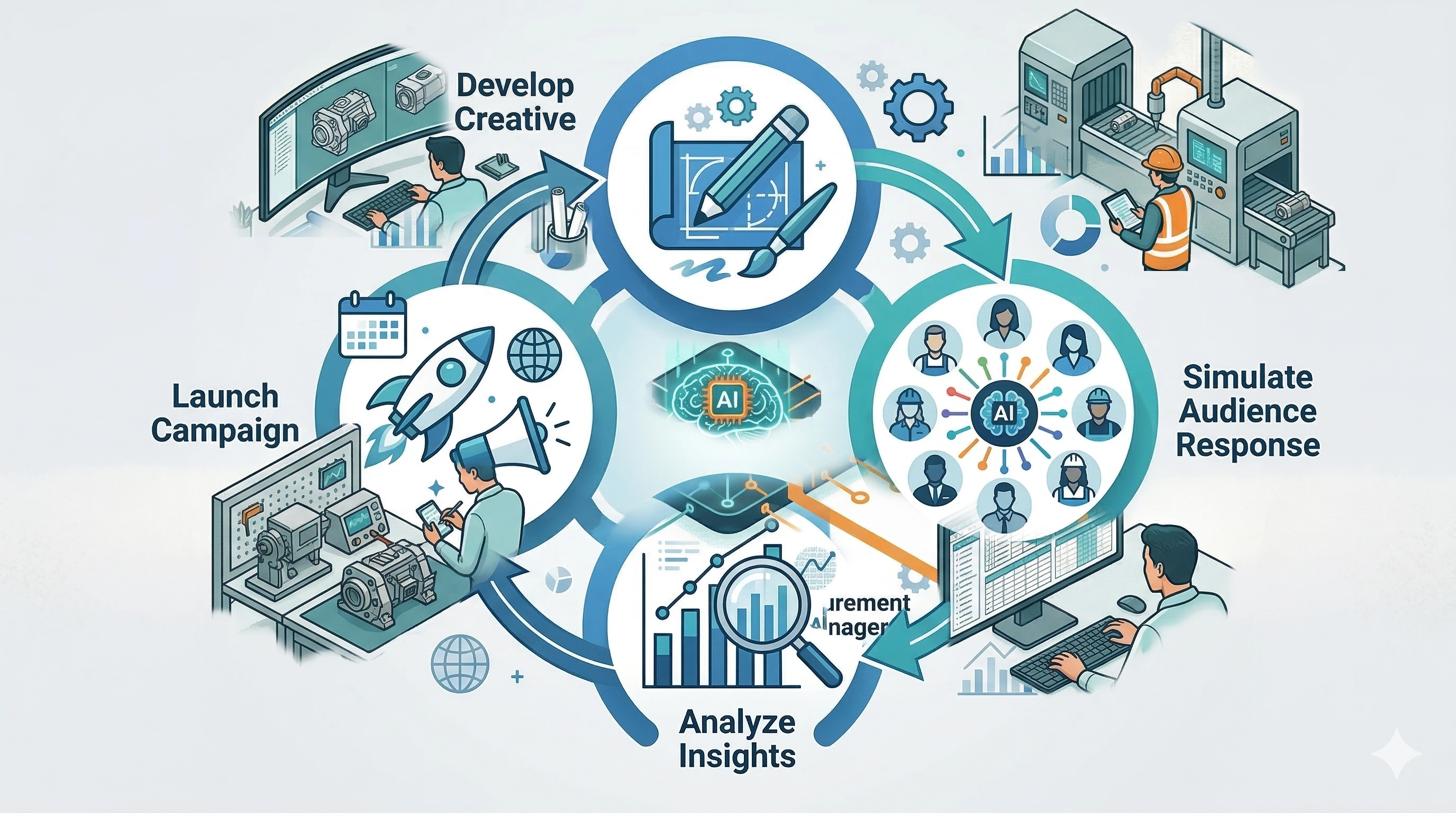
How Creative Analytics and Synthetic Audiences Work Together
Creative analytics and synthetic audiences deliver the greatest value when used together.
The process typically unfolds in several stages.
1. Creative Development
Marketing teams create multiple versions of messaging, visuals, or campaign concepts.
2. Audience Simulation
Synthetic audiences evaluate how different target groups respond to each concept.
3. Insight Generation
Creative analytics identifies patterns that indicate which elements drive engagement and credibility.
4. Campaign Deployment
Organizations launch campaigns with greater confidence in their effectiveness.
This creates a continuous learning cycle where each campaign generates insights that inform the next.
Why This Matters Especially for Mid-Market Manufacturers
Large corporations often have access to extensive marketing resources.
They may employ:
- Dedicated market research teams
- Data scientists
- Advanced analytics platforms
- Large advertising budgets
Mid-market manufacturers rarely have these advantages.
Many companies rely on small marketing teams that must balance multiple responsibilities.
As a result, marketing decisions are often made with limited data.
Creative analytics and synthetic audiences change this dynamic.
They allow mid-sized manufacturers to:
- Test messaging quickly
- Understand buyer reactions
- Improve communication clarity
- Reduce wasted marketing spend
In many ways, these technologies democratize capabilities that were once available only to large enterprises.
Organizations that support manufacturing ecosystems can also benefit from these tools by helping companies communicate their expertise more effectively.
Practical Applications for Manufacturing Organizations
Creative analytics and synthetic audiences can support several real-world use cases.
Improving Technical Messaging
Manufacturers often struggle to balance technical accuracy with clarity.
Testing different messaging approaches can reveal whether audiences respond better to:
- Detailed engineering explanations
- Simplified outcome-focused messaging
- Industry-specific language
Strengthening Case Studies
Many manufacturers have strong project outcomes but struggle to communicate them effectively.
Creative analytics can help identify:
- Which results resonate most strongly
- Which technical details build credibility
- How to structure case studies for maximum impact
Optimizing Digital Campaigns
Digital channels are becoming increasingly important for manufacturing companies.
Examples include:
- LinkedIn advertising
- Industry publications
- Search marketing
- Technical content marketing
Testing creative concepts before launching campaigns improves efficiency and reduces wasted spending.
The Future of Manufacturing Marketing
Manufacturing companies are entering a new environment where digital presence plays a critical role in supplier evaluation.
Buyers increasingly rely on digital signals to assess credibility before contacting potential vendors.
AI-driven systems are shaping how companies are discovered and evaluated.
In this environment, success depends on:
- Clearly articulated expertise
- Credible technical documentation
- Consistent messaging across digital channels
Organizations that adapt to this shift will have a significant advantage.
Those that rely on outdated marketing approaches may struggle to stand out.
Creative analytics and synthetic audiences provide manufacturers with tools to modernize how they communicate their capabilities.
Manufacturing Expertise Deserves Clear Communication
Many manufacturing companies possess deep technical expertise and operational excellence.
The challenge is rarely capability.
The challenge is ensuring that expertise is understood by the right audiences at the right time.
Creative analytics and synthetic audiences provide a way to evaluate and refine marketing communication using the same analytical discipline manufacturers apply to engineering and production.
For manufacturing executives and operations leaders, these technologies offer an opportunity to strengthen how their organizations communicate value in an increasingly digital and AI-driven market.
Clear communication of expertise has always mattered.
In the modern manufacturing landscape, it matters more than ever.
Frequently Asked Questions
What is creative analytics in manufacturing marketing?
Creative analytics is the process of evaluating how marketing elements such as messaging, visuals, and content structure influence audience engagement and campaign performance. For manufacturing companies, it helps determine whether technical capabilities and expertise are communicated clearly to engineers, procurement teams, and industrial buyers.
What are synthetic audiences?
Synthetic audiences are AI-generated models that simulate how specific groups of buyers respond to marketing content. These models represent different types of industrial decision-makers such as design engineers, sourcing managers, and operations leaders. They allow companies to test messaging and creative concepts before launching campaigns.
Why do creative analytics matter for manufacturing companies?
Manufacturing marketing involves complex products, technical audiences, and long sales cycles. Creative analytics helps organizations identify which messaging approaches resonate with technical buyers and which explanations build credibility. This reduces reliance on guesswork and improves marketing efficiency.
How do synthetic audiences improve marketing decision-making?
Synthetic audiences allow companies to simulate how target audiences react to marketing creative before campaigns launch. This enables organizations to test messaging, positioning, and visuals in advance, helping teams identify stronger approaches and reduce the risk of ineffective campaigns.
How is AI changing how manufacturers are discovered?
Engineers and sourcing teams increasingly use AI tools to research suppliers and technical solutions. These systems evaluate credibility signals such as documented case studies, technical expertise, and consistent messaging across digital channels. Manufacturers must clearly communicate their capabilities so both human buyers and AI systems recognize their expertise.
Can mid-market manufacturers benefit from creative analytics and synthetic audiences?
Yes. These technologies allow mid-market manufacturers to evaluate messaging, test marketing concepts, and understand audience response without requiring large research budgets or dedicated analytics teams. This helps smaller organizations compete more effectively in digital and AI-driven discovery environments.
.webp)
.webp)
.webp)
.webp)
.webp)
.webp)